
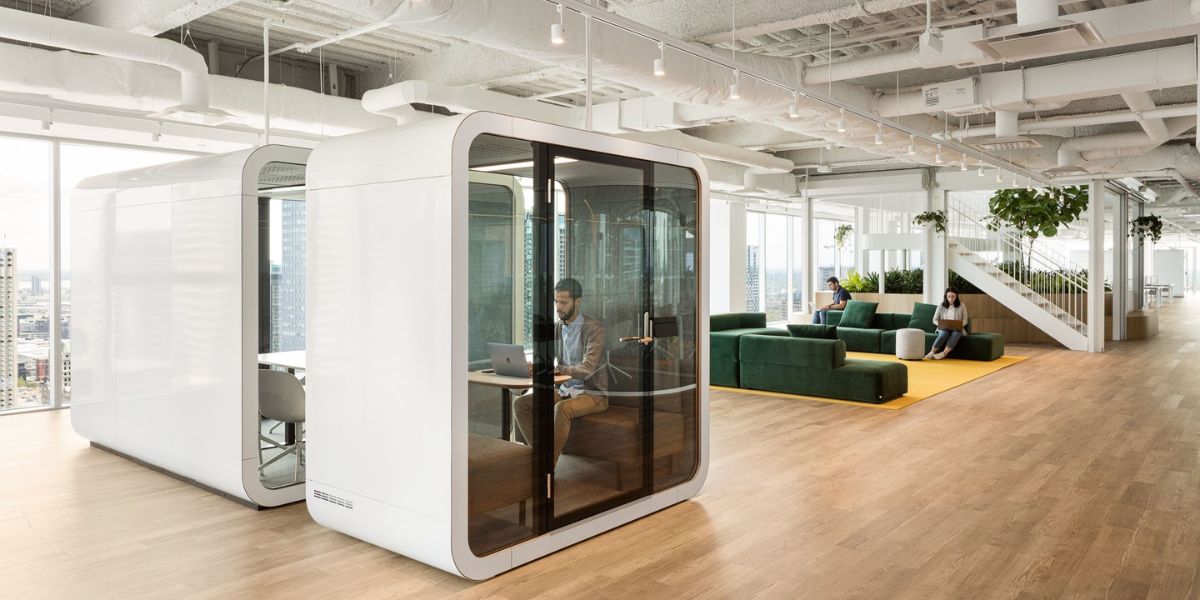
This article is written in collaboration with Burovision.
When industrial tenants tell us they’ve outgrown their office space, the first question we ask is: has the office portion of your current lease been planned to perform? In most cases, the square footage isn’t the problem, the layout is.
Before reaching for a lease amendment or a larger unit, there’s a step most tenants skip: a clear-eyed assessment of how the existing office space is actually working. The answer is often a layout problem with a layout solution. For many industrial tenants, a workplace assessment can reveal opportunities to improve flow, increase usable capacity, and delay unnecessary expansion costs.
Why Industrial Tenants Should Optimize Existing Space Before Expanding
We track Canadian industrial availability at 5.5% in Q1 2026, with national net asking rates around $15.00 per square foot. At those rates, every square foot carries real cost. Poorly planned office space inside an industrial lease wastes room and raises the opportunity cost of every square foot you’re already paying for.
This tends to surface in predictable ways: workflow friction, storage overflow encroaching on productive areas, and meeting capacity that can’t keep up with team size.
How Furniture Can Transform the Workplace
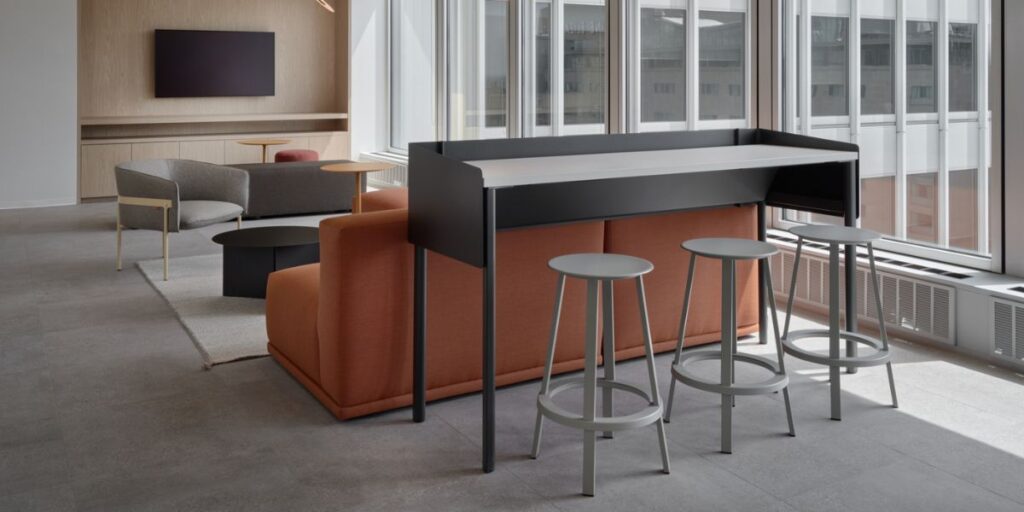
Burovision, with 35 years of workplace design expertise and a certified MillerKnoll dealership, approaches this challenge from the inside out. Rather than treating furniture as a finishing decision, Burovision works with organizations to use furniture as a reconfiguration tool, giving teams greater control over their environment without triggering a real estate event.
Often, these transformations can be achieved by repurposing furniture already in place and supplementing with select new pieces that enhance functionality and flexibility. A meaningful cost advantage over construction or relocation. In many cases, optimizing existing space can buy tenants valuable time before committing to additional square footage or lease amendments.
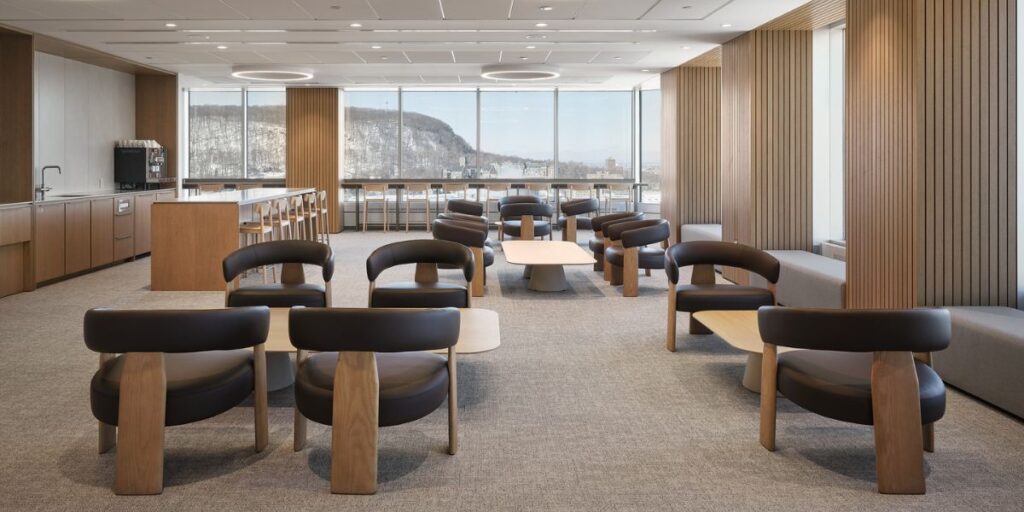
See It in Action: Ancillary Space Transformation
The following video demonstrates how rethinking ancillary furniture placement, without adding square footage, can visibly transform the feel and function of a workspace: Watch: Ancillary Application.
Test before implementing: The key to scaling
Each organization has its own way of working, which is why testing new concepts through a pilot phase is often recommended before scaling changes more broadly. These pilot spaces allow you and your team to experiment, gather feedback, and assess whether new workplace concepts can succeed based on actual usage patterns.
There are many ways to approach a pilot phase. Workstation configurations, meeting rooms, collaboration areas, and flexible team neighborhoods are all effective environments to test and evaluate. The data gathered through these pilots helps organizations make more informed long-term real estate decisions and better understand how their teams use the space.
This approach also helps reduce risk by allowing organizations to adapt gradually and implement lasting workplace changes that are more likely to be embraced by employees.
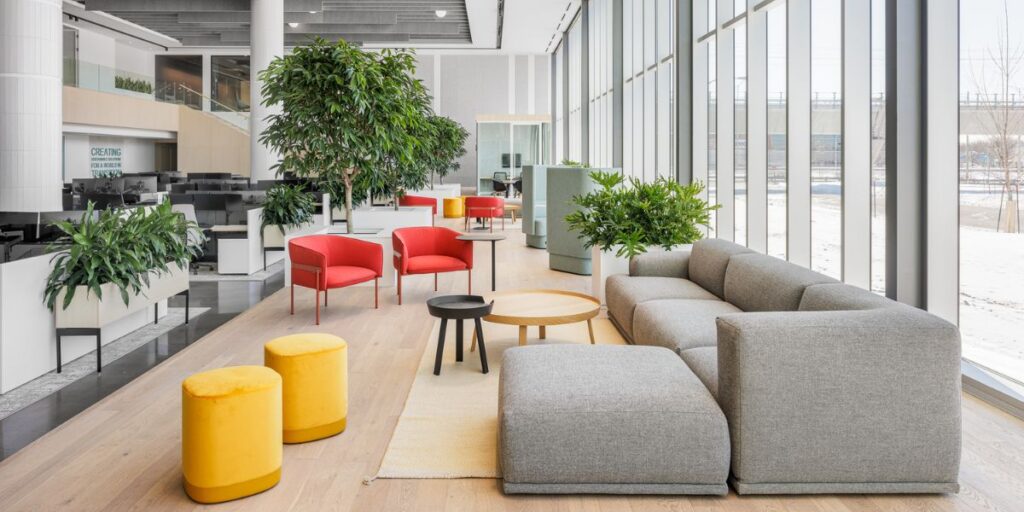
Creating Adaptable Spaces
Flexible furniture solutions allow team neighborhoods to be easily reconfigured as needs evolve. Rather than disrupting the workplace with major construction, organizations can adjust layouts, add collaborative zones, or create new work settings using modular and movable furnishings.
Adaptable spaces help organizations:
- Reduce disruption during periods of change
- Support evolving team structures
- Improve resiliency and long-term flexibility
- Maximize the value of existing square footage
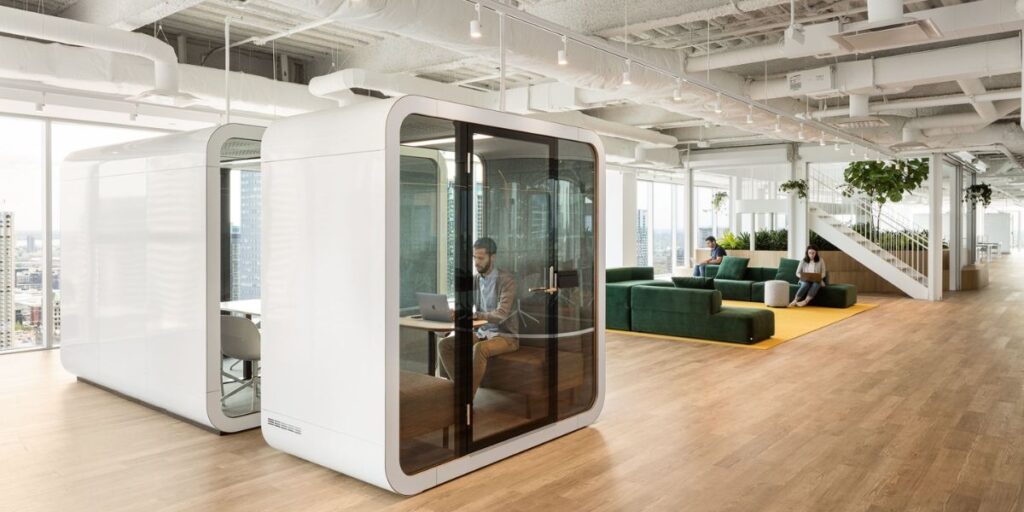
Enabling Choice Through Power and Technology
Accessible power and technology can be integrated directly into furniture solutions, allowing employees to move seamlessly between focus work, collaboration, and informal meetings. Workplace flexibility is no longer only about where people sit. When people have greater control over their environment, the office becomes more responsive, more supportive, and more productive.
Explore Burovision’s LiveDesign Studio
To see how these concepts come to life across different configurations, Burovision offers a LiveDesign session with their experienced designers to explore the application that best meets your needs.
Flexibility Is an Ongoing Process
Optimizing workplace flexibility isn’t a one-time project. It’s an ongoing process of learning, adapting, and responding to changing needs. An effective commercial real estate (CRE) strategy focuses on making better use of the space you already have before taking on additional square footage, continuously refining the workplace based on how people actually use it and what helps them work best. When space aligns with the way people work, organizations can improve collaboration, support productivity, reduce wasted space, and make smarter real estate decisions over the long term.
Our Recommendation for Commercial Real Estate Tenants
Before expanding your footprint, it’s worth understanding whether your current space is working as efficiently as it could be. In many cases, thoughtful workplace planning and flexible design strategies can improve functionality, reduce disruption, and delay unnecessary expansion costs.
Landmark Advisory Services and Burovision work with organizations to evaluate both the real estate and workplace side of the equation, helping teams make more informed space decisions before committing to additional square footage.
About Burovision
Burovision is a Montreal and Ottawa-based single-source commercial interiors partner for contract furniture, construction, project management and installation services with over 35 years of experience creating workspaces that perform. As a certified MillerKnoll dealer, Burovision helps organizations transform their environments without necessarily expanding their footprint. Their team combines design consulting with hands-on implementation, from pilot spaces to full-floor reconfigurations.
Learn more at burovision.com.